What Vintage Furniture Knows About Time
Why older furniture still feels better built, more grounded, and more alive.
There are certain objects that seem to understand time better than we do.
Vintage furniture is often like that.
Not because it is old for the sake of being old, but because it has already done what so many new things have not yet been asked to do. It has remained useful. It has endured rearrangements, moves, seasons, households, changing tastes, and decades of ordinary life. It has held weight, gathered stories, and continued on.
That kind of survival changes an object.
You can feel it in a drawer that still slides with quiet confidence. In the softened corners of a table touched thousands of times. In the slight darkening of wood where sunlight found it year after year. In the polished brass pull that grew brighter where hands returned often. In a chair whose frame remains steady long after fashions around it have come and gone.
These are not flaws. They are records.
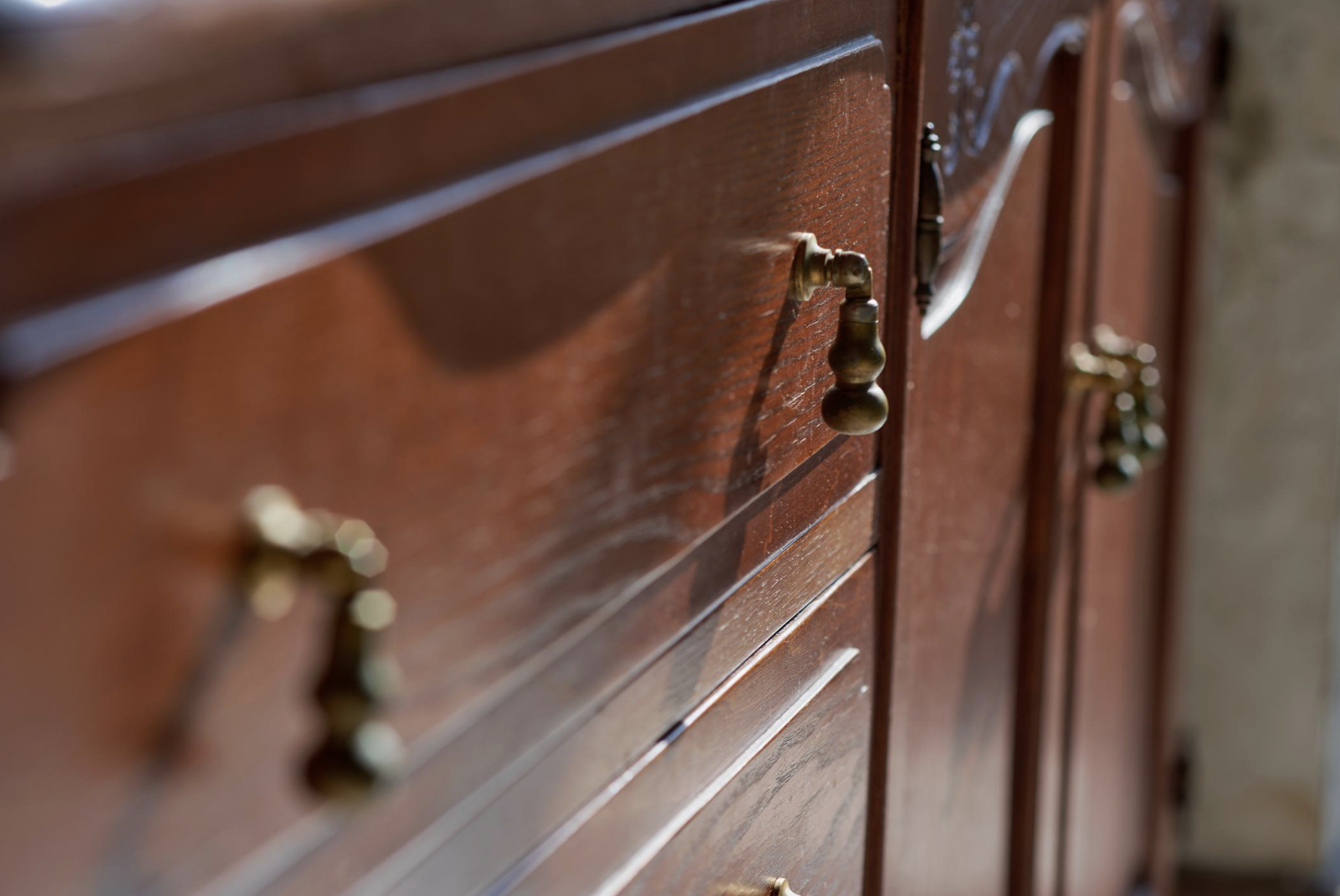
Close-up of vintage wood dresser with aged brass hardware and rich patina, showing why older furniture still feels better built and more alive.
Furniture once carried a different expectation. It was often built with the quiet assumption that it would be kept. Repaired when needed. Moved to another room. Passed to another home. Used by people not yet born when it was first made.
That expectation changed the way things were built.
Solid wood was chosen not because it was trendy, but because it could last. Joinery mattered because the piece was meant to endure movement and use. Hardware was substantial because it would be handled thousands of times. Even modest furniture was often made with an understanding that longevity had value.
You can often see it in the details: dovetail drawers, solid wood backs, weight-bearing joinery, replaceable hardware, finishes that can be restored instead of discarded.
Many contemporary pieces are designed around a different timeline. Fast assembly, lower weight, short-term convenience, replacement over repair. There is little shame in practicality, but there is a difference between something made to serve for a while and something made to remain.
Older furniture - often what we now call vintage furniture - is like that. It knows that by remaining, it requires substance.
It also knows that beauty deepens with use.
Wood grows richer over time. Finishes mellow. Small irregularities become character rather than defects. A table that has hosted dinners, letters, work, laughter, and long quiet mornings carries a presence no showroom can manufacture. Objects absorb life. The best ones reveal it slowly.
This is part of why older furniture can make a room feel grounded so quickly.
It brings with it a sense of continuity. A suggestion that not everything must be new to be valuable. That history can coexist with modern life. That utility and beauty are not opposing forces. That permanence, in an age of disposability, can feel quietly luxurious.
At House of Thayer, we are drawn to pieces that have already proven they know how to last. Furniture with weight. Furniture with memory. Furniture shaped by use and made richer by time. Pieces that arrive not empty, but carrying something with them.
Because vintage furniture understands what many modern objects have forgotten:
Usefulness can be beautiful.
Care leaves marks.
And some things grow more convincing with age.
We source pieces that have already proven they know how to last. Explore current finds through House of Thayer online and in person.