Comfortable With Friction
Somewhere along the way, convenience stopped feeling like a luxury and instead became the expectation.
“I got it on Amazon”, she said.
I kept replaying the sentence in my head for almost 2 hours on a flight from Seattle to Denver. The woman said it with a sharp upper midwestern accent that made the phrase feel even more abrasive somehow.
“I got it on Amazon.”
The sentence barely means anything to me anymore because it isn’t translational. Amazon is a platform. They didn’t make it.
She was talking about some aggressively scented antibacterial hand sanitizer she kept forcing onto everyone around her as though we couldn’t already smell it. The flight attendant asked if she had found it at Trader Joe’s.
“No,” she replied. “I got it on Amazon.”
Not who made it.
Not where it was made.
Not why she liked it.
Not even a story of discovery or referral.
Just:
“I got it on Amazon.”
In 2026, Amazonification is real.
We now live inside systems designed to remove nearly every point of friction from daily life: one-click purchasing, same-day delivery, disposable products replacing repair, algorithmic recommendations replacing discovery, meals detached from seasonality, and homes filled faster than they can be meaningfully lived in. And with no exit strategy!
The modern economy rewards speed, accessibility, and constant availability, often at the expense of material awareness, emotional attachment, environmental responsibility, and an understanding of the labor required to make the things we consume.
Convenience itself is not inherently bad. I’m not suggesting everyone churn butter and sew their own clothing by candlelight (though have you ever tried? Just saying…) But when every inconvenience is engineered out of life entirely, I think we begin losing our relationship to patience, craftsmanship, ritual, maintenance, anticipation, and the quiet satisfaction that comes from participating more intentionally in the world around us.
When my brand was Candelaria, I explored these ideas mostly through scent and small retail environments. The transition into House of Thayer allowed me to widen the lens beyond candles and into furniture, textiles, interiors and now into repair, collected objects, domestic rituals, and the emotional lives of the things we keep in our homes.
At its simplest, I think the truth is this:
House of Thayer is comfortable with friction.
Years ago while making taper candles in the store, a man stood watching me work.
“That looks time consuming,” he said.
“Yes,” I replied. “Artisanal products tend to be.”
“There has to be a faster way to do that.”
“There is,” I told him. “But then it wouldn’t be handmade. It would be mass produced.”
He immediately began explaining business to me. Scaling. Efficiency. Time as money. Faster production. Higher output.
And honestly? He wasn’t wrong.
There are plenty of entrepreneurs who dream of placing their products into the hands of every person on the planet. Plenty of businesses built specifically to scale quickly and eventually sell.
I’ve just never been one of them.
I’m a journey girl.
I like the work.
I like learning.
I like repetition.
I like making things slowly enough to understand them.
In the world of Amazonification, that probably makes me a unicorn as a business owner.
I reject the “easy button.” Not because I’m above convenience, but because I think the hidden cost of convenience has become too high. Convenience is often invisible labor outsourced somewhere else. Outsourced environmentally. Outsourced emotionally. Outsourced materially. Outsourced humanly.
And I think people feel that loss even if they can’t always articulate it.
So this small corner of House of Thayer will continue moving differently.
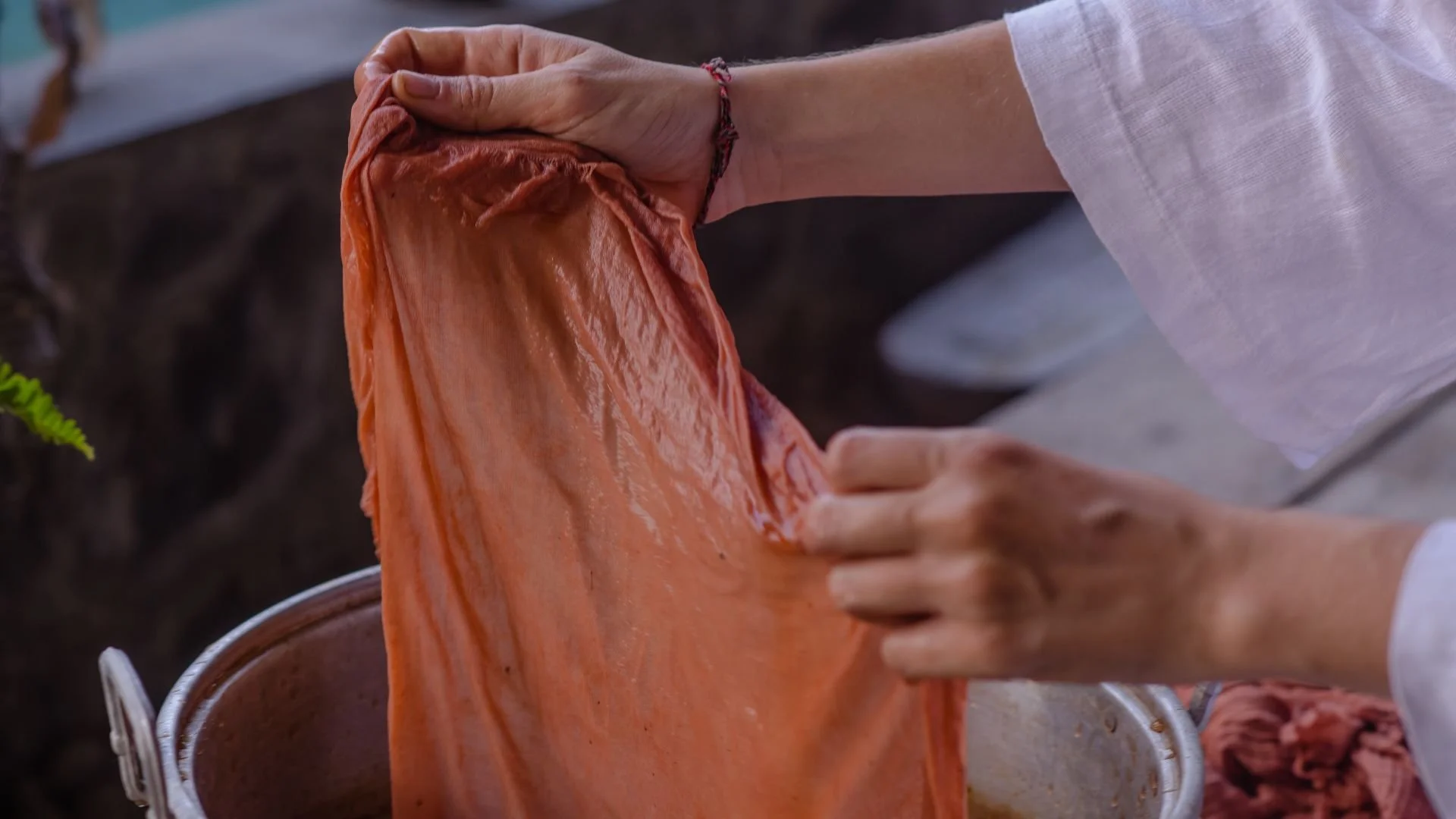
Avocado-dyed cotton textiles in a makeshift dye pot
I’ll continue thrifting clothes instead of buying fast fashion and curating a selection of pieces that I know my people want. Restoring objects instead of replacing them and making them make sense in 2026. Burning candles daily and making them so you can too. Mending socks. Saving fabric scraps and using them for another purpose. Watching movies on VHS tapes through a tube television from the 1980s and offering a nostalgic selection of media in my antique booth. Drinking canned Coke while dyeing textiles with avocado skins in my kitchen. Feeding birds and wildlife against my HOA’s recommendations. Making Kraft mac and cheese for dinner. Going to Costco with my husband for date night.
Not because I’m trying to cosplay some anti-modern life.
But because I think there is still deep value in touching life more directly and intentionally.
In understanding where things come from.
In repairing instead of replacing.
In collecting thoughtfully.
In slowing down where possible.
In creating homes filled with memory instead of just products.
If you’ve somehow found this tiny corner of the internet, I imagine we probably share some version of that instinct already.
And I think there’s still room for people like us here.