There are certain kinds of change that do not arrive all at once.
They unfold gradually, almost imperceptibly at first, until one day you notice that the shape of things has shifted. A room feels larger because something has been removed. A familiar street seems different because you’ve begun walking it at another hour. The objects around you remain the same, yet the rhythm of the life moving through them has quietly altered.
The past while has felt something like that.
Not dramatic, exactly. More like a slow rearranging of the interior architecture of my days. The spaces where work happens, where ideas take shape, where time stretches in unfamiliar but strangely welcome ways.
When you spend enough time working with materials, you begin to understand that transformation rarely happens suddenly. Wood carries the memory of seasons inside its grain. Wax remembers every flame that has passed through it. Old metal holds the quiet evidence of weather and time without apology. Brass changes colors when left alone and become vibrant in areas that are used with frequency.
Materials do not rush toward their final form. They become what they are through pressure, patience, and duration.
Perhaps that is why I have always felt most at ease working with them.
Lately I’ve found myself returning to that understanding…this is, paying closer attention to the quiet persistence of matter, the way objects reveal their histories if you look long enough, the subtle shifts that take place when something continues existing beyond the intentions originally placed upon it.
I have always been someone who prefers a map. Kind of. I like the end goal and I love the journey. Not because uncertainty frightens me, but because I enjoy building things intentionally. I like knowing where a process begins and imagining what shape it might take as it unfolds.
But every so often life removes the map.
And when that happens, the only honest response is to slow down long enough to understand where you are standing.
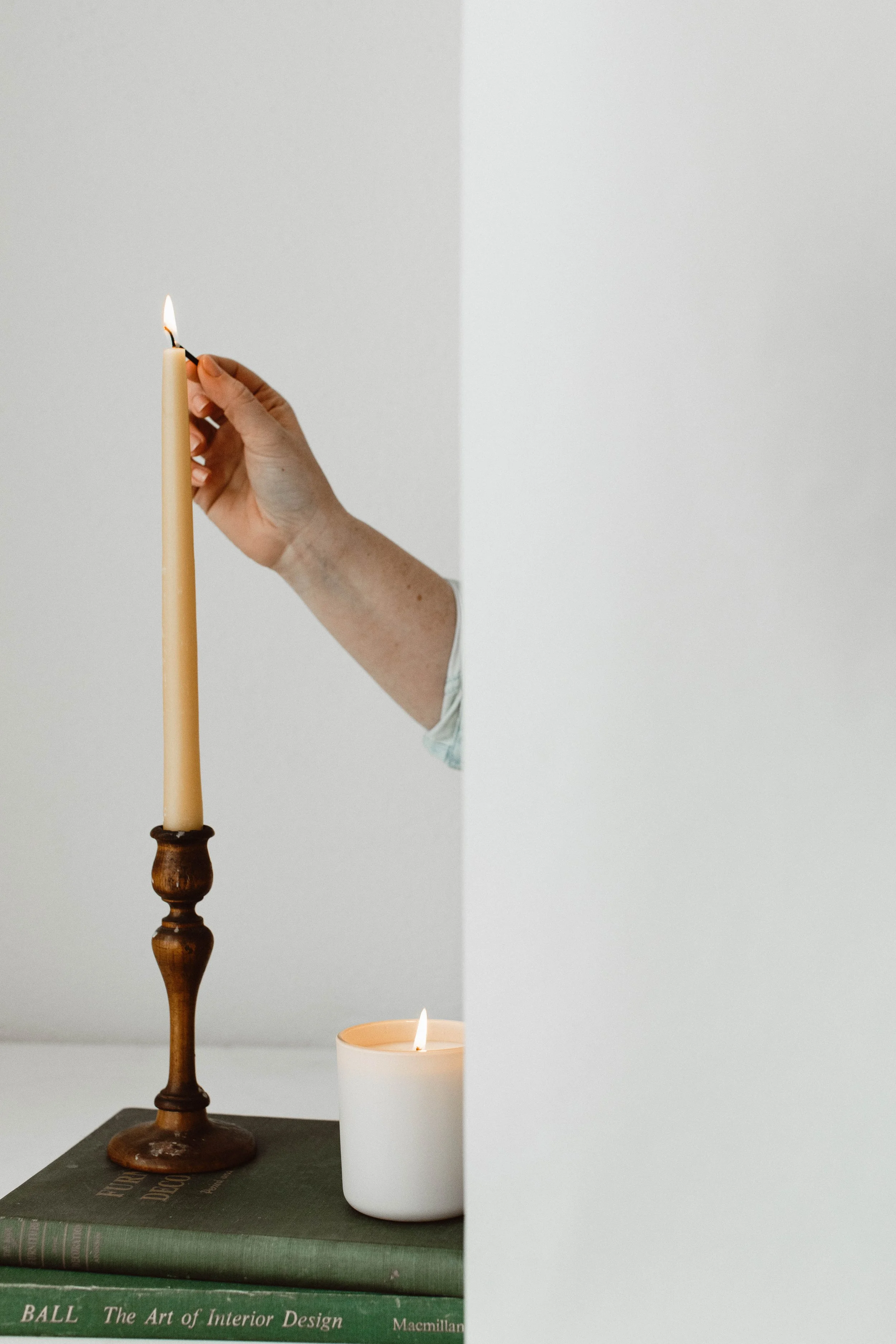
The rhythm of work changed. The structure around it shifted. The days grew quieter, and in that quiet a different kind of attention began to emerge: one that isn’t driven by urgency or output, but by observation.
There is a certain privilege in that kind of pause.
It allows you to notice what remains when the noise falls away.
What remained, I realized, were the things that had always mattered most.
The work itself.
The materials.
The instinct to build something meaningful out of ordinary matter.
That instinct never disappeared. It simply moved beneath the surface for a while, waiting for its moment to reappear in a different form.
Recently I’ve begun to recognize the signs of it again.
A pattern that begins as a sketch and slowly reveals its rhythm. A piece of furniture whose shape becomes clear only after spending time with the grain of the wood. A candle poured without the urgency that once accompanied every production cycle.
These are quiet beginnings. Easy to overlook if you are only paying attention to outcomes.
But they are often the first signs that something is forming again.
Not necessarily the same thing that existed before.
Materials rarely return to their original state once they have been shaped. Grain shifts, finishes deepen, edges soften with use. The object remains recognizable, but it is not identical to what it once was.
Work has a similar way of evolving.
It changes shape as the person making it changes shape.
And sometimes the most honest thing you can do is allow that transformation to happen without rushing to define it too quickly.
For now, that is where things stand.
The worktable is active again. The materials are finding their places. The ideas that have been quietly forming are beginning to show themselves. Slowly, and with a certain amount of patience.
It may take a little while before all of it has language.
But the foundation is there.
And for the moment, that feels like enough.
The materials will tell me what comes next.